RECENT POSTS
29.September.2026
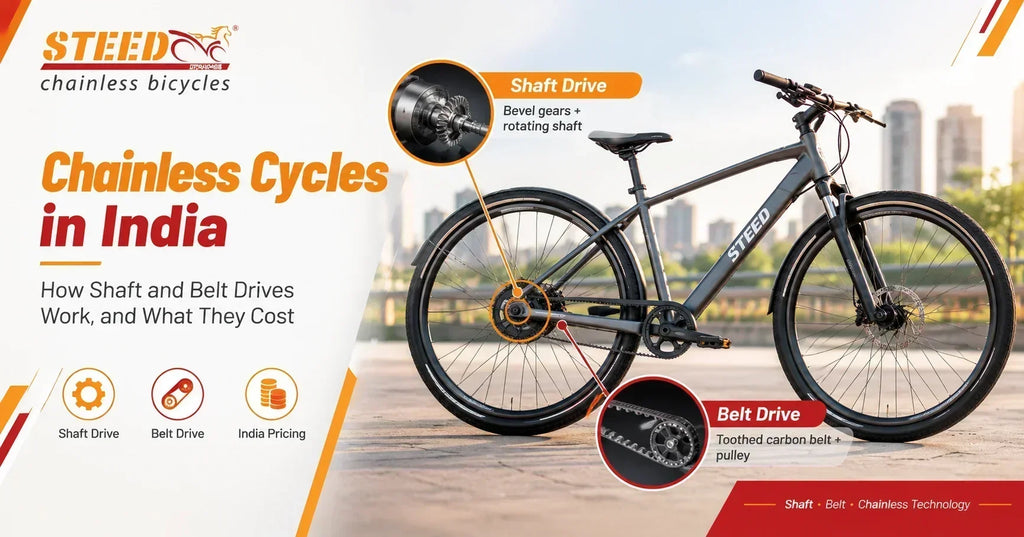
Chainless Bicycles: How Shaft and Belt Drives Work, Their History and Prices in India
0 Comments


How to Choose the Right Bicycle Size by Height (Kids, Teens and Adults)
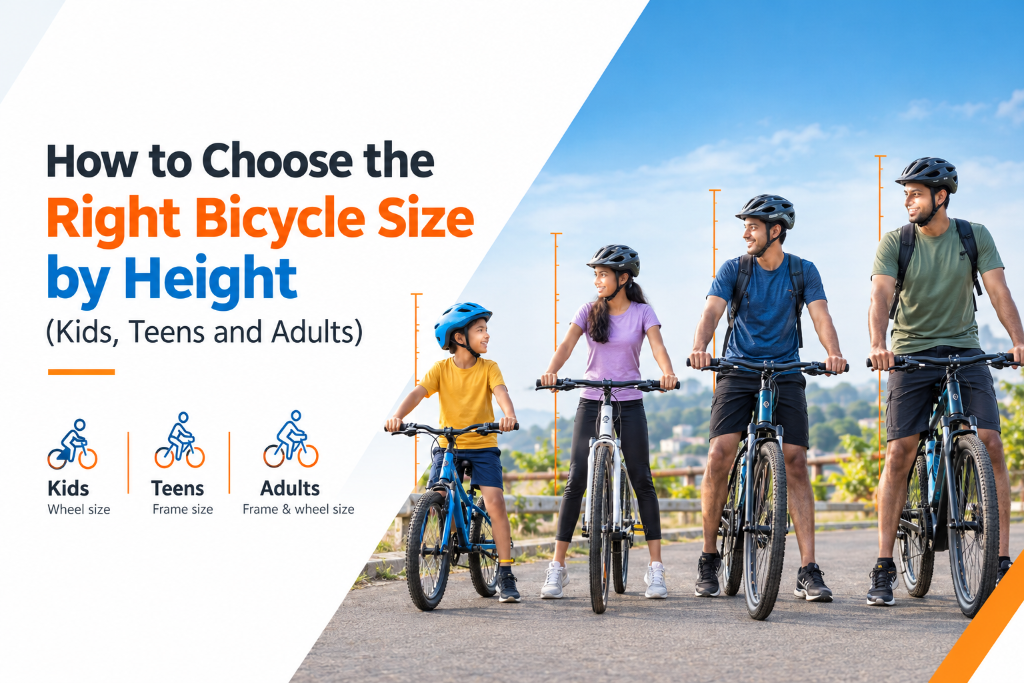
How to Choose the Right Bicycle Size by Height (Kids, Teens and Adults)
The quickest way to pick the right cycle size is to measure your height, match it to a size chart, and confirm the fit with a standover test. A bike that is too big is hard to control. One that is too small strains your knees and back. Either way, you end up riding less. This guide explains bicycle size by height for kids, teens and adults, so you can answer "which cycle size for my child?" or choose your own with confidence.
Cycle Size Chart By Height
Bicycle sizes vary by brand, so use this chart as a starting point and check the manufacturer's recommendations for the best fit.
For Kids Choose By Wheel Size

For Teens And Adults: Choose By Frame Size

Measure Two Numbers First: Height And Inseam
Inseam settles close calls, because riders of the same height can have different leg lengths. Measure both:
-
Stand barefoot against a wall and mark the top of your head. Measure from the floor to the mark.
-
Place a book between your legs, spine pressed upward, as high as it will go. Mark the wall at the top of the book and measure from the floor.
Short inseam for your height: choose the smaller size. Long inseam: choose the larger one.
Which Cycle Size For My Child?
Go by height, not age, then check four points:
-
Feet: Seated, the child should touch the ground with the balls of both feet, or flat-footed on a smaller bike.
-
Standover: Standing over the frame, there should be 1 to 2 inches of space between the child and the top tube.
-
Reach: Arms should bend slightly at the elbows when holding the handlebar. Fully stretched arms mean the bike is too big.
-
Brakes: Small hands must squeeze the levers comfortably without shifting grip.
Do not buy a size up. An oversized bike is harder to balance and stop. Raise the seat as your child grows instead.
Children between 4 and 5 feet usually choose between 20" and 24" wheels. Steed's Ashva belt drive ABR 20 and ABR 24 are both made for this range.
Choosing A Size For Teens
Most teens above 5 feet fit an adult small frame better than a large kids' bike. Between two sizes? Pick the smaller frame and raise the seatpost.
Signs the bike is now too small: knees close to the handlebar, a cramped back, or a seat at its maximum mark.
Choosing A Size For Adults
Pick the frame first, then fine-tune the seat and handlebar:
-
Standover clearance: Stand over the top tube with both feet flat. Leave about 2 to 3 inches of space on a mountain or hybrid bike.
-
Saddle height: With your heel on the pedal at its lowest point, your leg should be nearly straight. With the ball of your foot on the pedal, the knee bends slightly.
-
Reach: You should hold the handlebar with relaxed shoulders and a gentle bend in the elbows. Overstretching points to a frame that is too large.
Between two sizes? Go smaller for city riding and stop-start traffic. Go larger for long, steady rides.
Wheel Size For Adults: 26", 27.5" or 29"?
Frame size sets the fit. Wheel size sets how the bike rides.
-
26": Quicker to turn and a little lighter. Suits shorter riders and tight city streets.
-
27.5": A middle option that works for riders of average height.
-
29" and 700c: Roll over potholes and speed breakers with less effort and hold speed better. Taller riders usually prefer them.
On bumpy roads, a larger wheel paired with a suspension fork is the more comfortable choice, as long as you can still stand over the frame with room to spare.
Frame sizes on Steed Chainless Bicycles
Steed Dynamics numbers its frames in centimetres and matches each to a rider height:

Example: a 5'6" rider fits the 52 frame. A 6'1" rider should look at the 54 or 56 in the three-speed range.
Shaft and belt drives have no greasy chain so you can test ride in everyday clothes.
Five Sizing Mistakes To Avoid
-
Choosing by age. Height is the reliable measure.
-
Buying for future growth. A bike that fits now is safer and more fun.
-
Ignoring inseam. It can shift your ideal size by a full step.
-
Relying on the seat to fix everything. The seat adjusts, but the frame does not.
-
Skipping the test ride. Even five minutes shows whether the reach, brakes and pedal position feel natural.
Buying Online? Check These First
-
Listed rider height: Look for the height range the seller gives for each frame size, not just the size number.
-
Seatpost range: A seatpost with plenty of travel gives you room if you fall between two sizes.
-
Exchange policy: Confirm you can swap the size if it does not fit.
-
Assembly: Many bikes arrive part-assembled. Ask a dealer to set the seat height and brakes before your first ride.
Frequently Asked Questions
What size cycle do I need for 5'6"?
Most riders at this height fit a 16 to 17 inch frame with a 26" or 27.5" wheel. On Steed's numbering, that is the 52 frame.
Is a 26-inch cycle suitable for a 10-year-old?
Usually not. A child between 4'4" and 4'10" fits a 24-inch wheel better. A 26-inch bike will be hard to reach and stop.
Which matters more, frame size or wheel size?
For children, wheel size is the main factor. For teens and adults, frame size matters more, because wheel sizes cluster around a few standard options.
Can two people share one bicycle?
Only if their heights are within about 2 to 3 inches of each other. The seat and handlebar can cover a small gap, but not a large one.
How often should I check my child's cycle fit?
Every six months, or sooner if your child has grown noticeably.