
RECENT POSTS
29.September.2026
Chainless Bicycles: How Shaft and Belt Drives Work, Their History and Prices in India
0 Comments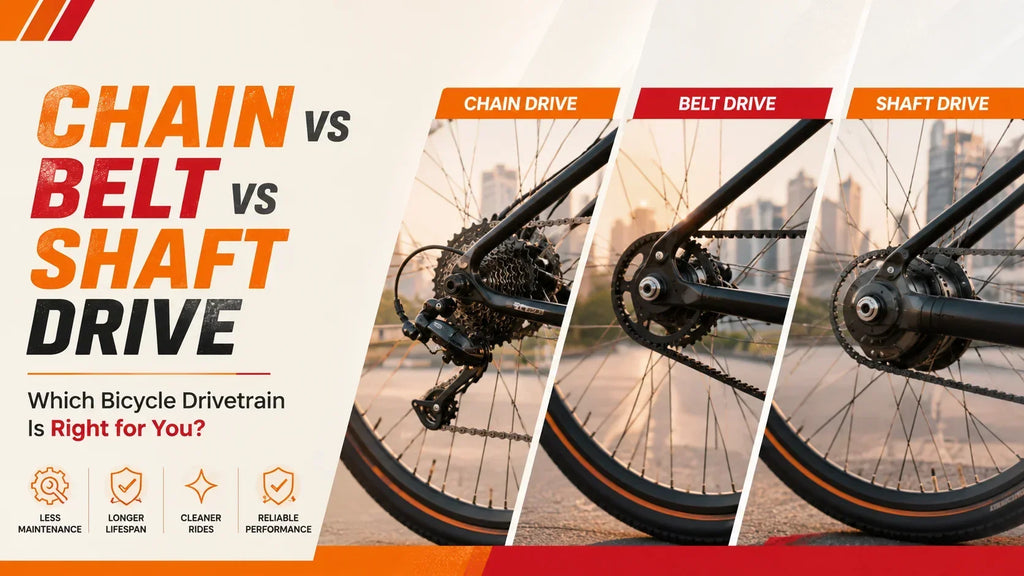

Chainless Bicycles: How Shaft and Belt Drives Work, Their History and Prices in India
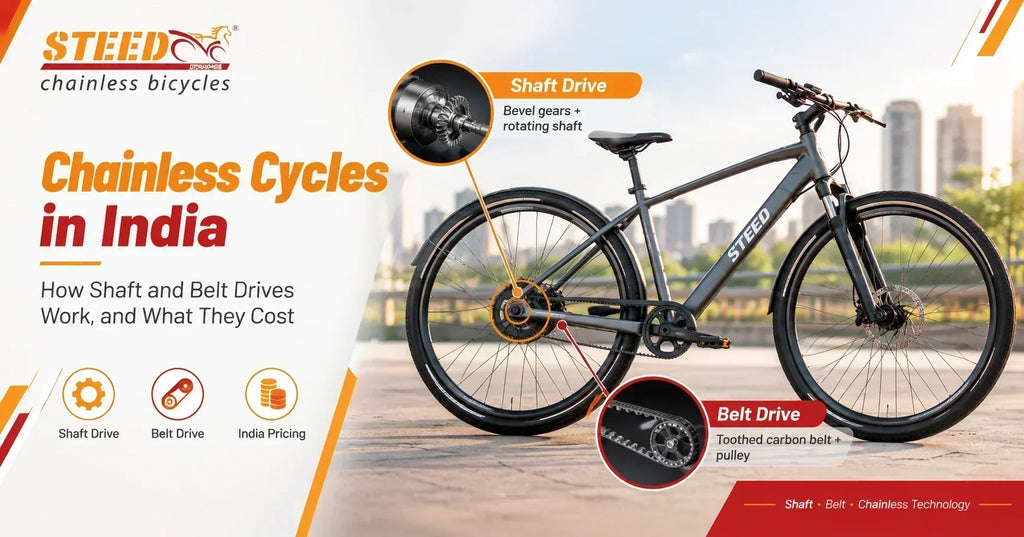
A chainless cycle replaces the chain with either a rotating shaft and bevel gears or a toothed carbon belt. Shaft drives were patented in 1890 and sold in the 1890s, then lost out to the chain for about a century. Internal gear hubs and carbon belts revived them. In India, Steed Cycles builds both types, and its cycles without a chain start at Rs. 15,499.
 Drive life figures are Steed's own ratings, not independent test results.
How Does a Chainless Bicycle Work?
A shaft-drive bicycle has a bevel gear at the pedals, another at the rear wheel, and a rotating shaft between them. A belt-drive bicycle uses a toothed polymer loop with carbon fibre cords, and it runs dry.
Neither can fit a derailleur, so multi-speed models use an internal gear hub sealed inside the rear wheel.
Chainless Bicycle Advantages and Disadvantages
Advantages
-
Nothing exposed to rain, mud or dust, so no rust and no oily trouser cuffs
-
No chain oiling; a belt needs only an occasional wipe-down
-
Longer drive life than a chain, by Steed's ratings
Disadvantages
-
Shaft drives lose more energy because power turns through two sets of bevel gears
-
Shaft bikes weigh 1 to 2 kg more, since the small gears need a stronger frame
-
Rear wheel removal takes longer after a puncture
-
A belt cannot be split, so the frame must open at the rear to fit it
-
A badly tensioned or misaligned belt wears faster and can get noisy
-
The purchase price is higher than a basic chain bike
Chainless Bicycle Price in India: Steed Models
Steed Cycles describes itself as India's first chainless bicycle manufacturer. Its cycles are designed and built by Ceeyes Mobility Solutions in Tamil Nadu. Prices are from Steedcycles. in as of 29 September 2026 and change with offers.
-
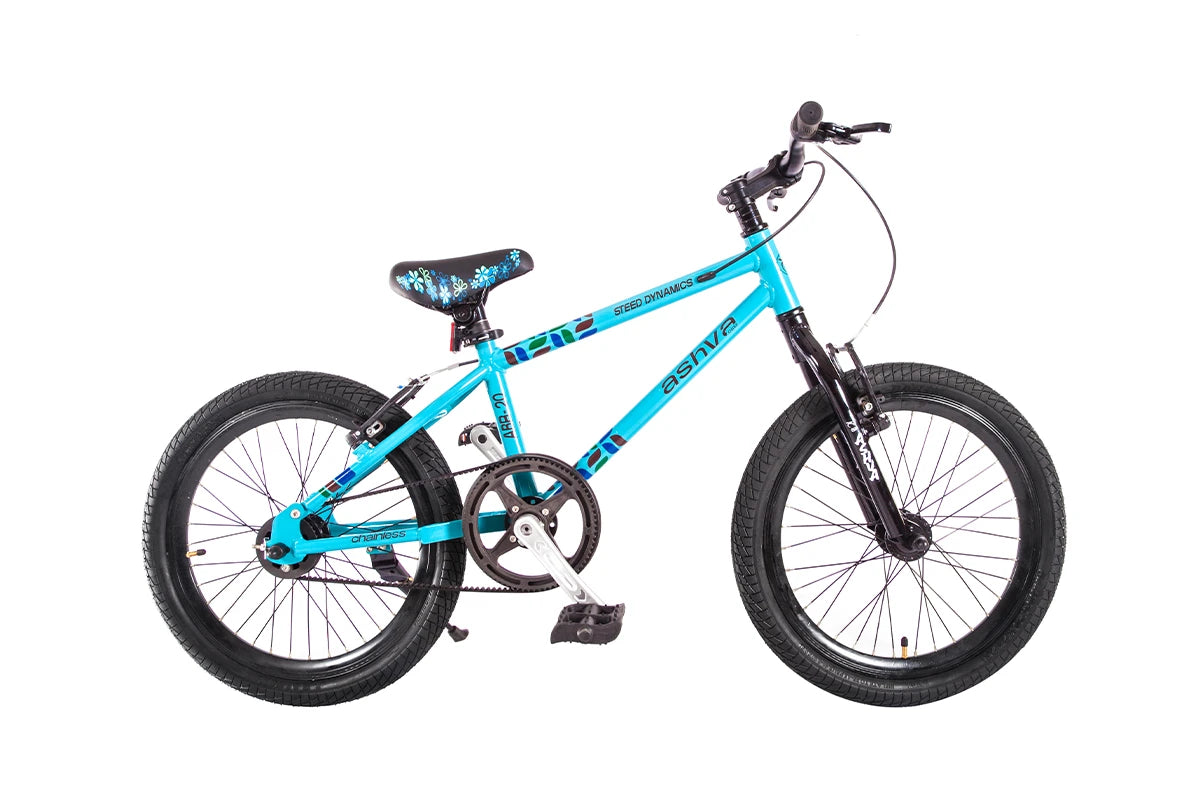
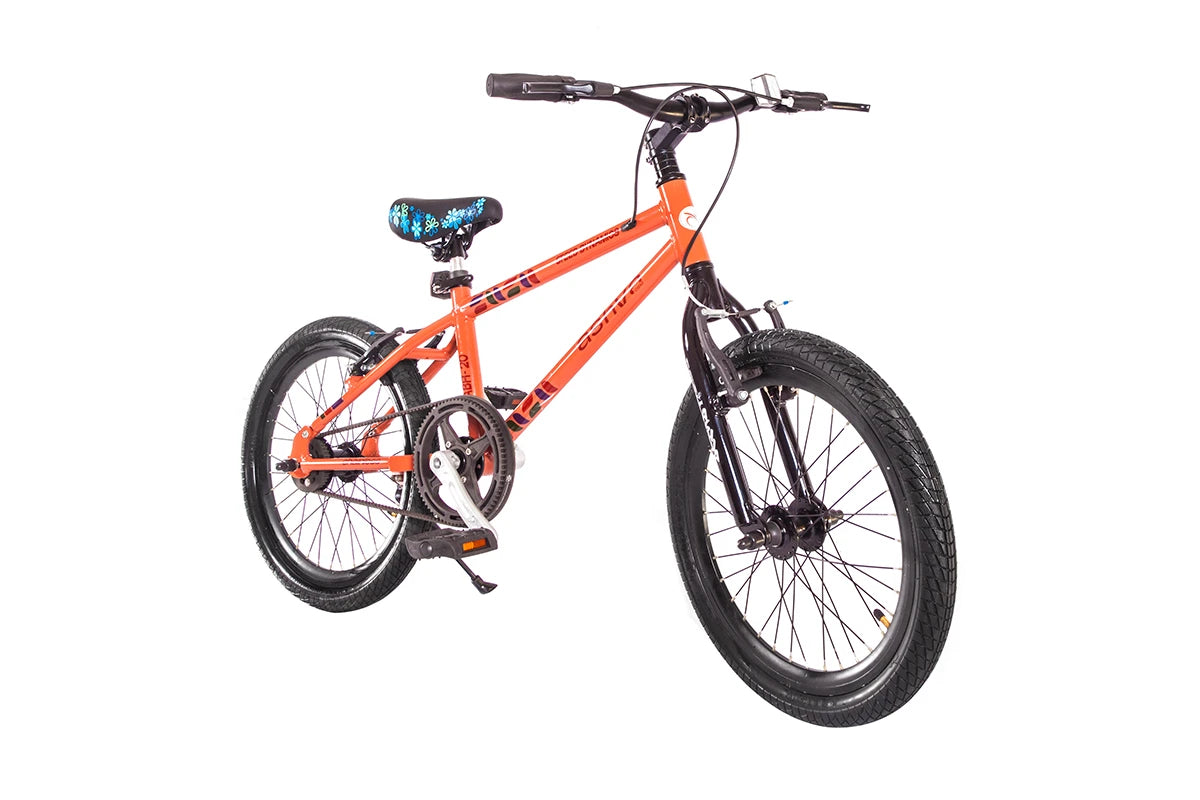
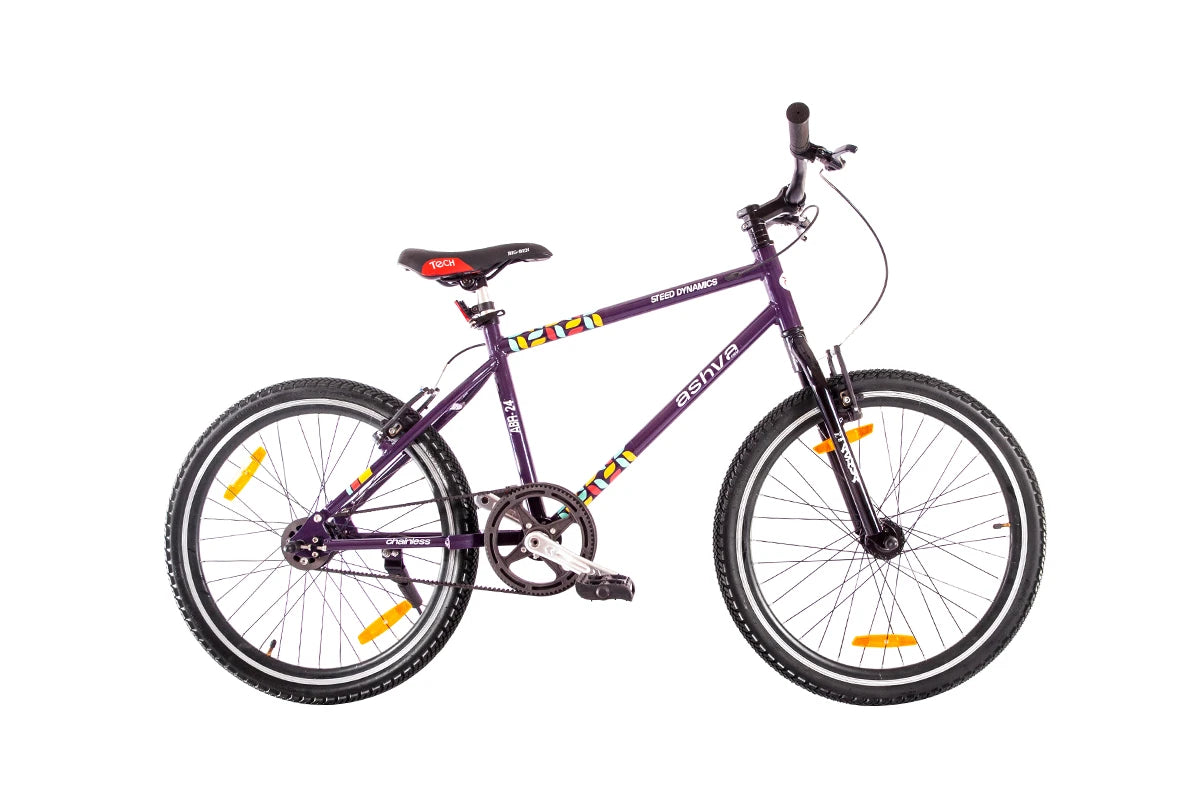
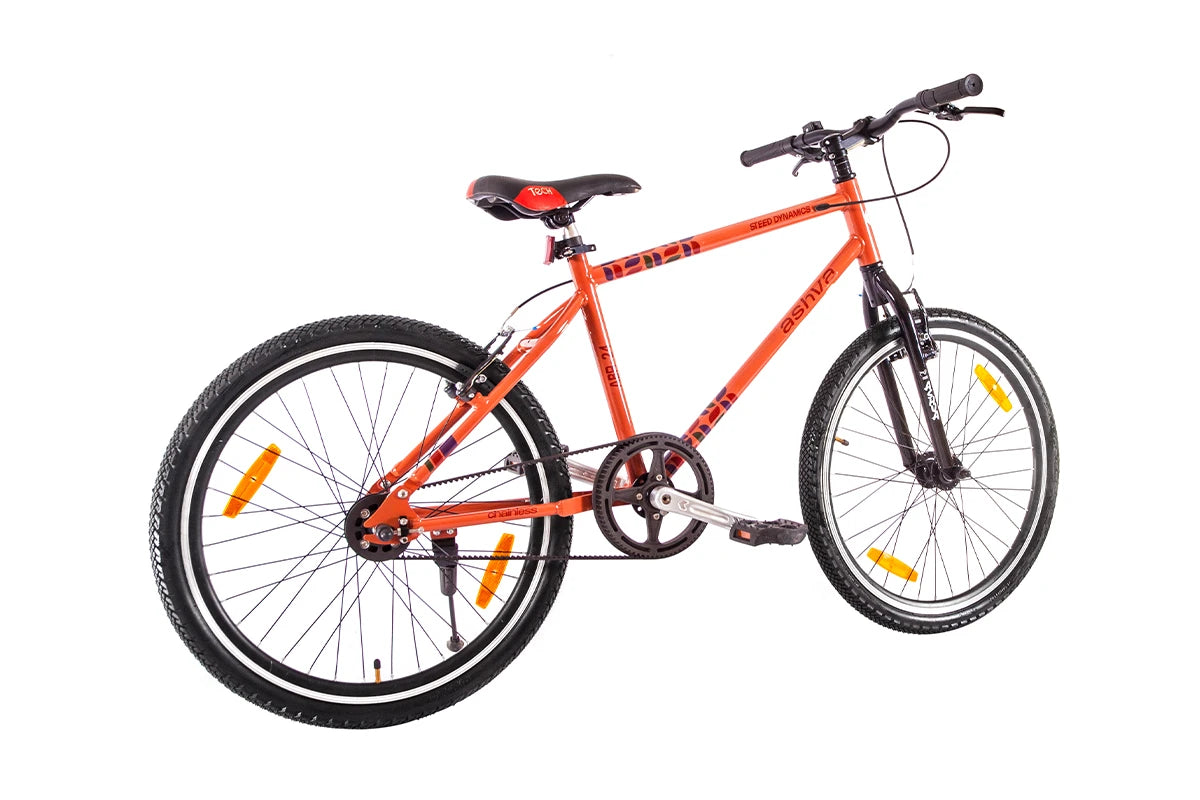
Belt drive, single speed (Ashva: ABR, ABS, MUC): Rs. 15,499 to 20,269
-
Shaft drive, single speed (AS, SR, SS, SSU): about Rs. 22,000 to 33,000, in 42, 48 and 52 frame sizes, with rigid or suspension forks
-
Shaft drive, three-speed (TR, TS, TSW women's, TCS): Rs. 46,819 to 53,209; the TCS adds a lockable suspension fork and hydraulic disc brakes
Commissioning costs an extra Rs. 750, which may vary by location.
Frames are validated with Finite Element Analysis to reduce weight and raise load capacity. The cycles are tested to ISO 4210, the international standard for bicycle strength and fatigue.
See every model on the Steed chainless bicycle range page, or find a showroom through the dealer locator.
Chainless Cycles for Daily Commutes in India
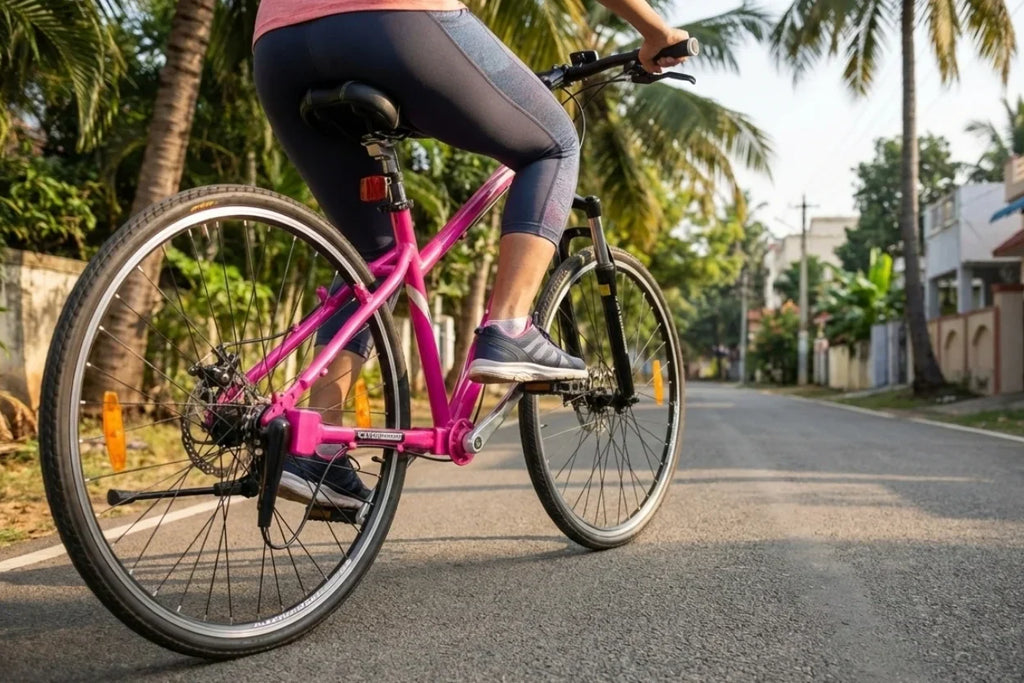
Monsoon moisture rusts exposed chains, dust mixes with chain oil into an abrasive paste, and grease stains clothes. A sealed shaft or dry belt avoids all three. Tyres, brakes and bearings still need regular checks, so "maintenance-free" means no drivetrain servicing, not no servicing at all.
Why Chainless Bikes Lost in the 1890s
Walter Stillman filed a US patent for a shaft-driven bicycle in December 1890, and it was granted in July 1891. Columbia pushed a chainless model from 1897, and sales were decent in 1898 and 1899 but far below those of chain bicycles.
Precision bevel gears were expensive to cut, and in 1896 engineer Archibald Sharp argued they could not be milled accurately enough for practical use. Gear losses ran to about 8 percent. Chain bikes could add sprockets, and later derailleurs, for many gears at low cost, which a shaft drive could not match.
How Hub Gears and Carbon Belts Revived the Idea
Hub gears. Internal gear hubs matured around the 2000s, giving shaft bikes several speeds. Suitable hubs come from NuVinci, Rohloff, Shimano, SRAM and Sturmey-Archer.
Carbon belts. Early rubber belts stretched under load and skipped teeth. Harley-Davidson had used belt drives on motorcycles for about 20 years, and its supplier Gates later adapted the technology for bicycles. The Gates Carbon Drive is a continuous polymer loop with moulded teeth and carbon fibre cords that do not stretch like rubber. Trek used it early on commuter bikes, and by 2010 Specialized, Raleigh, Norco and Civia offered models with it.
Who Should Buy a Chainless Cycle
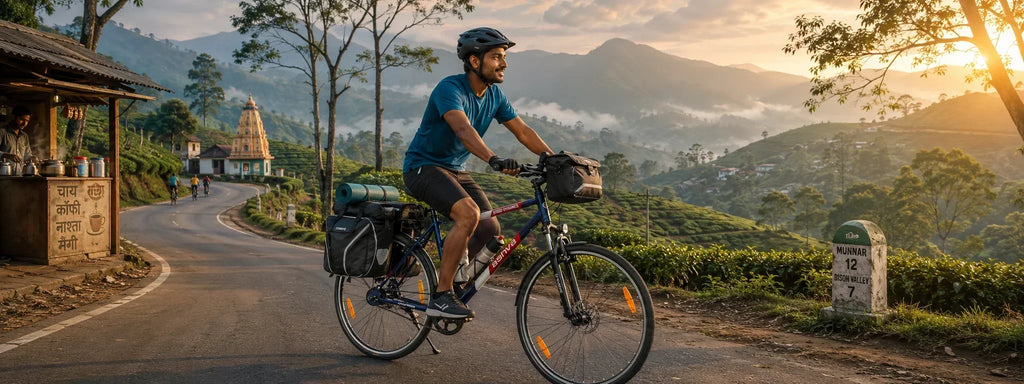
Choose chainless if you ride daily through rain and dust and commute in work clothes. A single-speed Ashva belt model suits flat routes; a three-speed shaft model suits mixed terrain.
Choose a chain bike if you race, ride long climbs, want the lowest weight, or like swapping components. A chain bike is also the only option under a Rs. 15,000 budget.
Chainless Bicycle FAQs
Are chainless bicycles slower?
A shaft drive is about 92 percent efficient against about 99 percent for a chain. Commuters will barely notice; racers and hard climbers will.
Do belt drives need lubrication?
No. Keep the belt tensioned and aligned, and wipe off grit occasionally.
Which lasts longer, a shaft or a belt?
Steed rates the shaft at up to 15,000 km and the belt at up to 5,000 km.
Is a shaft-drive bicycle harder to repair after a puncture?
The rear wheel takes longer to remove than on a chain bike. Ask the dealer whether special tools are needed and how long the job takes.
How much does a chainless bicycle cost in India?
Belt-drive single speeds start at Rs. 15,499, shaft single speeds run from about Rs. 22,000 to 33,000, and three-speed shaft models from Rs. 46,819 to 53,209.
Are chainless bicycles good for hills?
A three-speed shaft model gives low gears for slopes, but the extra weight and drivetrain losses make long, steep climbs harder than on a light chain bike.
Can a belt-drive cycle have gears?
Yes, through an internal gear hub.
Do chainless bikes suit heavier riders?
Check the rated load on the specific model's spec sheet.
Book a Test Ride
Test ride a shaft-drive or Ashva belt-drive model at Steed Cycles.